Sprinkler System

What is a sprinkler system how it works?
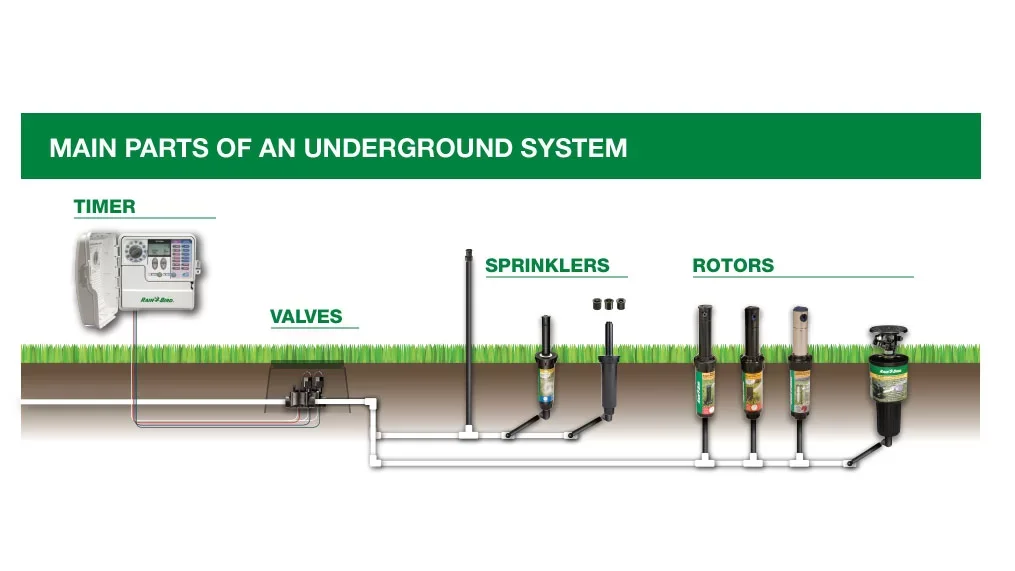
The Timer (The Brain) Shown on the far left of the diagram, the Timer (or Controller) is the command center. It is typically mounted on a wall and sends electrical signals to the rest of the system. This is where you set the schedule, telling the system exactly which days to water and for how long.
The Valves (The Gatekeepers) Located underground (shown in the box to the left of the pipes), the Valves act as automatic faucets. When the Timer sends a signal, the valve opens to let water flow into the pipes. When the watering cycle is finished, the valve shuts tight to stop the flow.
The Sprinklers (Spray Heads) Shown in the middle of the diagram, these are pop-up spray heads. These are stationary heads that pop up when water pressure builds and spray a fixed fan of water (like a mist). They are perfect for smaller grassy areas or flower beds where you need a gentle, constant spray.
The Rotors (Long-Range Heads) Shown on the far right, Rotors are larger, more powerful heads. Unlike standard spray heads, these rotate back and forth, throwing a stream of water a longer distance. These are designed for large, open lawn areas where a fixed spray head wouldn't reach far enough.
The advantages of a sprinkler system
-
Set it and Forget it. Forget about waking up early to drag hoses. The Timer acts as the brain of your system, running your watering schedule automatically—whether you are at work, asleep, or on vacation.
-
Hand watering is inconsistent and often misses spots. We use high-powered Rotors to cover large lawn areas evenly and gentle Sprinklers for delicate flower beds, ensuring every plant gets exactly the hydration it needs.
-
It sounds counterintuitive, but an automatic system often uses less water than a hose. By using the Timer to control cycles perfectly and targeting specific zones, you eliminate the waste of runoff and over-watering.

We know your needs
We predict the future: We install systems that account for how your trees will grow in five years, ensuring your pipes don't get crushed by roots down the road.
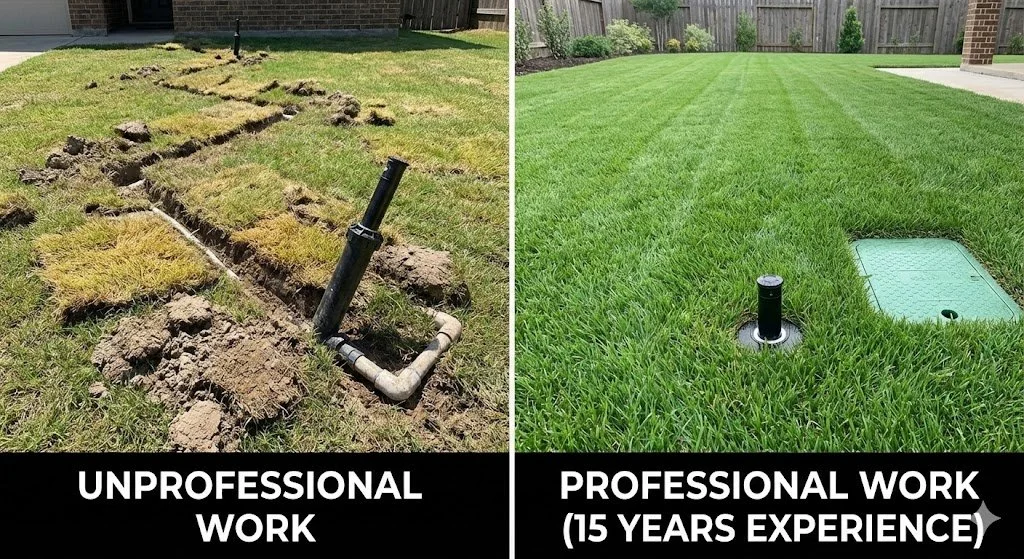
We get it right the first time: 80% of our repair calls are to fix systems installed by inexperienced contractors. Skip the repair bill—start with the experts.
We know local soil: We don't just dig; we analyze. We know exactly which heads work best for the clay or sandy soil in this region.
Your lawn isn't a textbook case. It has unique slopes, shade patterns, and soil types. While others are just learning the basics, we bring 15 years of hands-on problem-solving to your project.